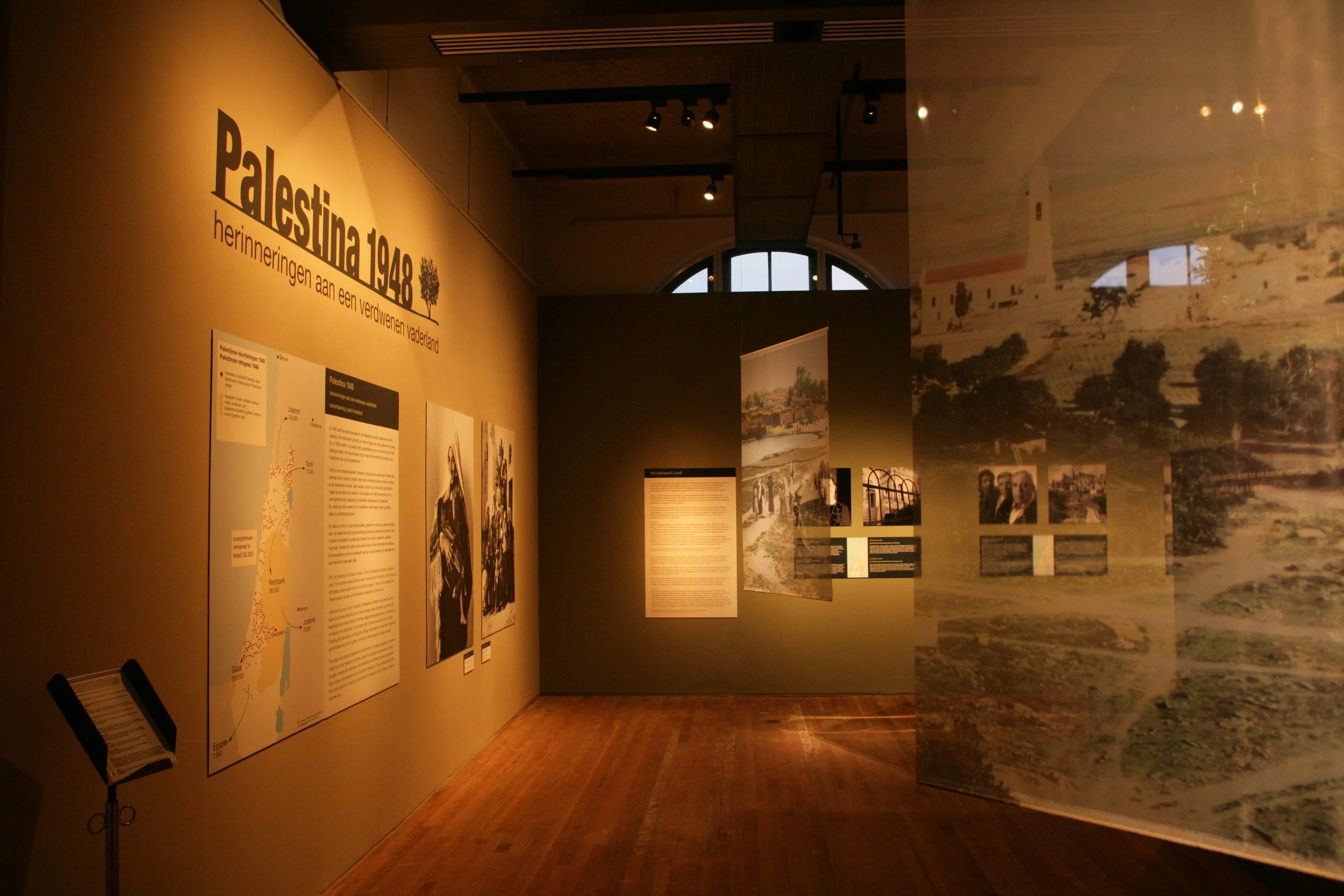
Homeland Lost
Alan Gignoux
International touring exhibition & forthcoming photobook
2006-2011
Created between 2004 and 2005, Homeland Lost juxtaposes portraits of Palestinian refugees and exiles with images of the places they were forced to leave in 1948, during the war that led to the creation of the state of Israel. Through this pairing of people and places, the project examines displacement, memory, and the enduring consequences of exile.
The series includes portraits of Palestinians living in refugee camps and cities across Lebanon, Jordan, the West Bank, Gaza, and Israel. Taken together, the portraits reflect the diversity of the Palestinian diaspora in terms of gender, age, class, and religion, while collectively presenting a society shaped by long-term displacement.
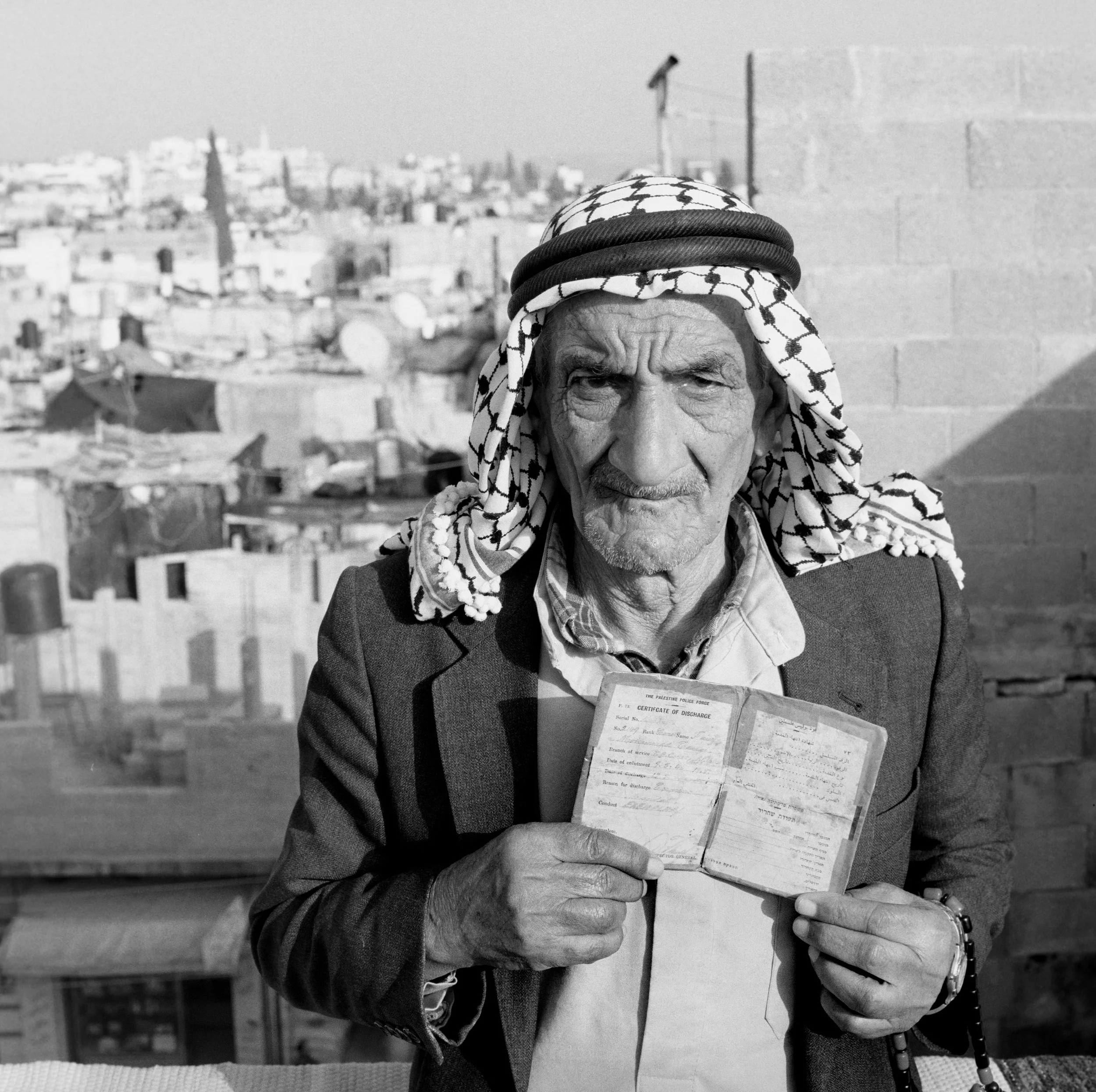
Left: Fawzi Mahmoud al-Tanji, photographed in Tulkarm Camp, West Bank; originally from al-Tantura, former Palestine
Right: Al-Tantura, former Palestine
Palestinians refer to the events of 1948 as al-Nakba— “the catastrophe”—a term that foregrounds the epochal scale of loss caused by dispersal, exile, alienation, and denial. For many older Palestinians, memories of lost homes, villages, communities, land, orchards, and olive groves remain vivid, alongside the powerful idea of a lost homeland. Lives have been built around the hope of return, sustained through objects such as keys, maps, and entitlement cards preserved for decades as tangible symbols of ownership, memory, and loss.
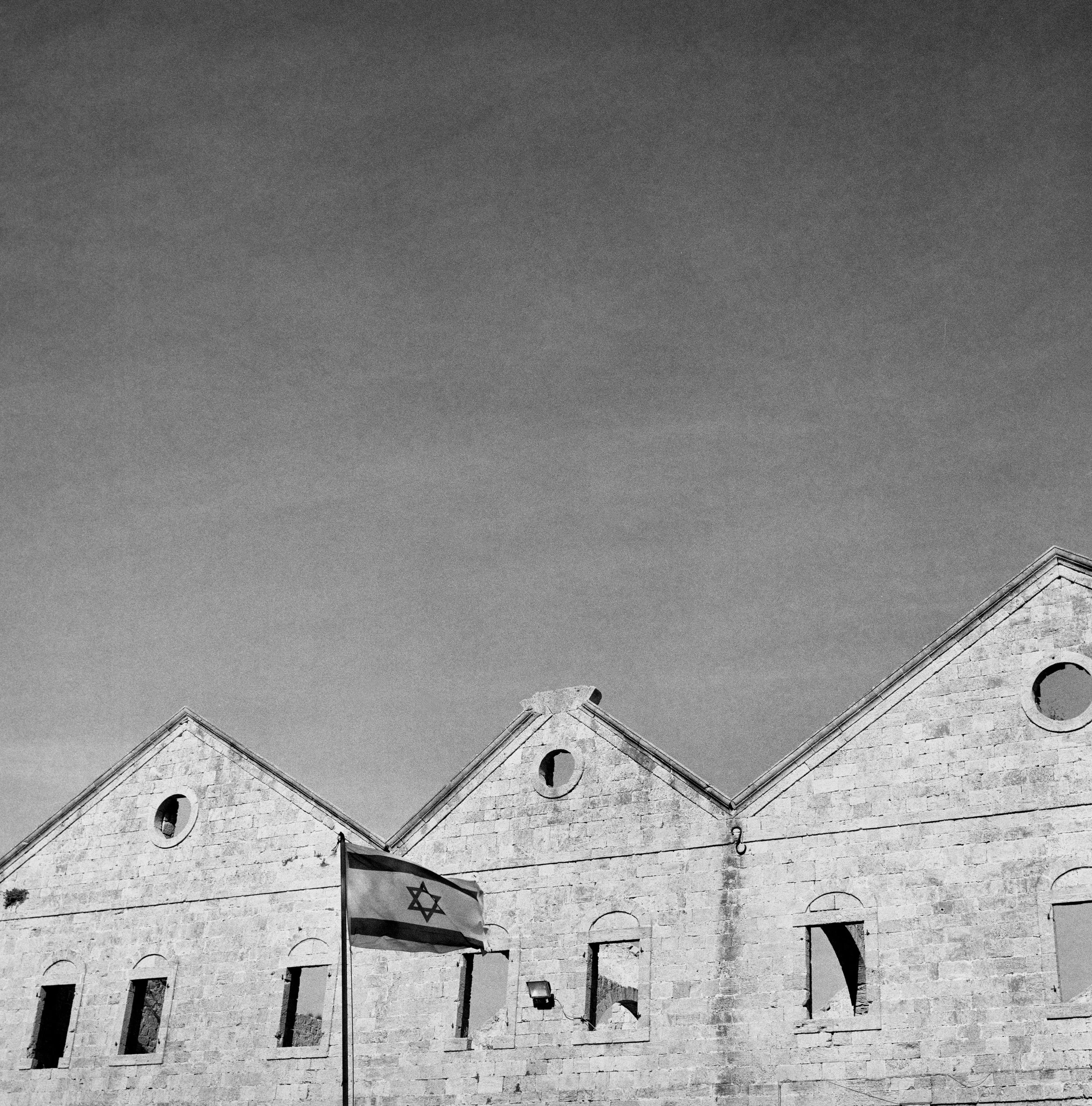
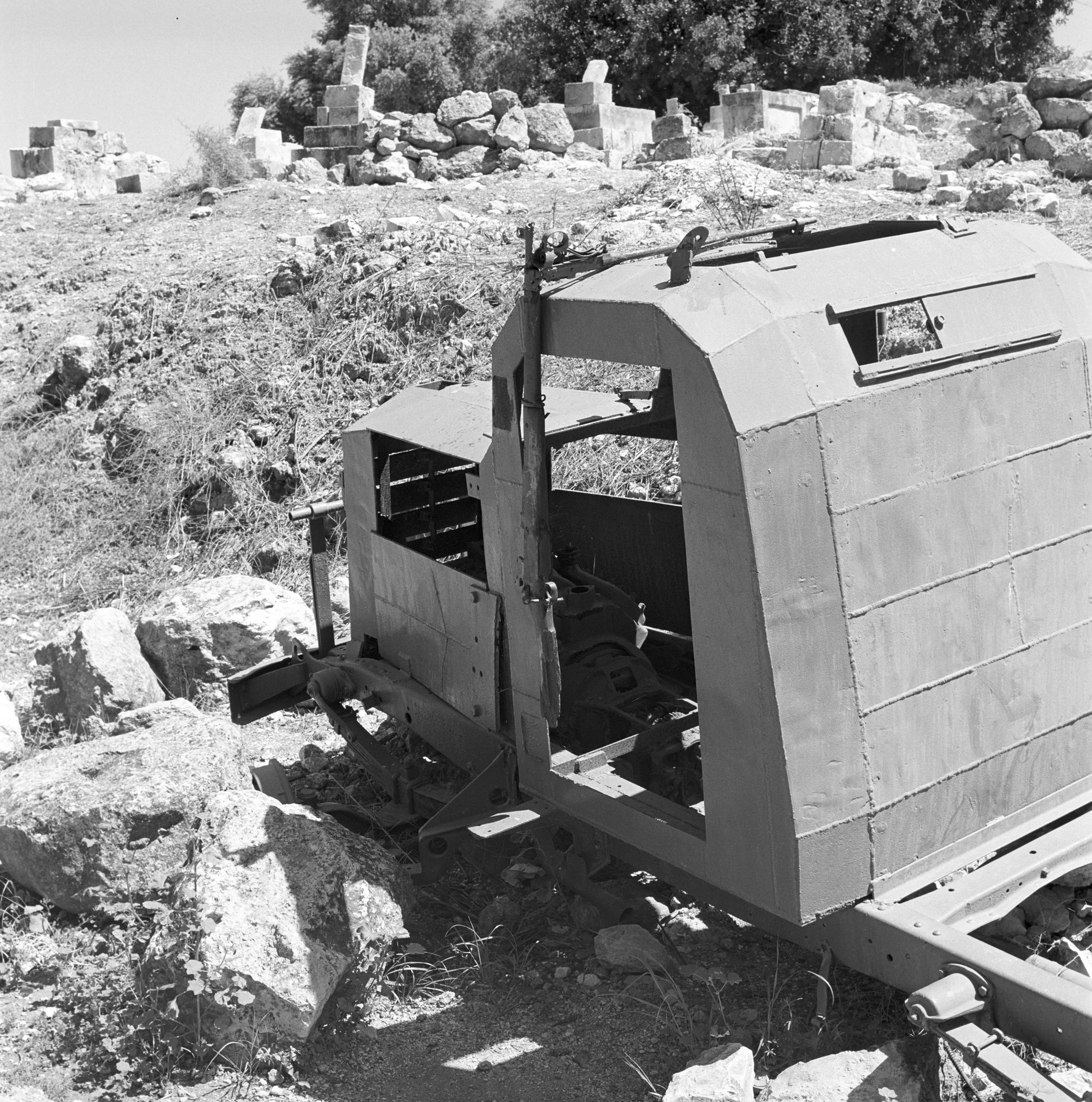
In Homeland Lost, the portraits are paired with photographs of the villages from which the people photographed originated, which had been home to their families and tribes for centuries. These landscape images document the physical erasure of the former Palestinian built environment. Many villages were destroyed by Israeli forces during the war to prevent return and have since fallen into ruin, becoming overgrown or deliberately obscured by forests of pine. In other cases, houses remain but have been repurposed—occupied by Israeli families or converted to new uses—further distancing the present from the lives once lived there.
The individuals represented in this project were displaced from their homeland more than seven decades ago. By pairing each portrait with an image of a former home or village, Homeland Lost symbolically reunites people with the places from which they were separated, using photography as a means of bearing witness to both absence and persistence.
Homeland Lost toured to Al Ma’mal Centre for Contemporary Art (2006, Jerusalem), Bethlehem Peace Centre (2006), Jaffa Cultural Centre (2006, Nablus), Birzeit University (2006, Ramallah), Dar al Anda Gallery (2007, Amman), Masrah al Madina Theatre (2007, Beirut), Contemporary Image Collective (2007, Cairo), Alexandria Contemporary Arts Forum (2007), the Library of Alexandria (2010), and the Cinemateque (2008, Tel Aviv). It has also been included in group exhibitions at the Barbican (2008, London), the Tropenmuseum (2008, Amsterdam), and the University of Ghent (2011).
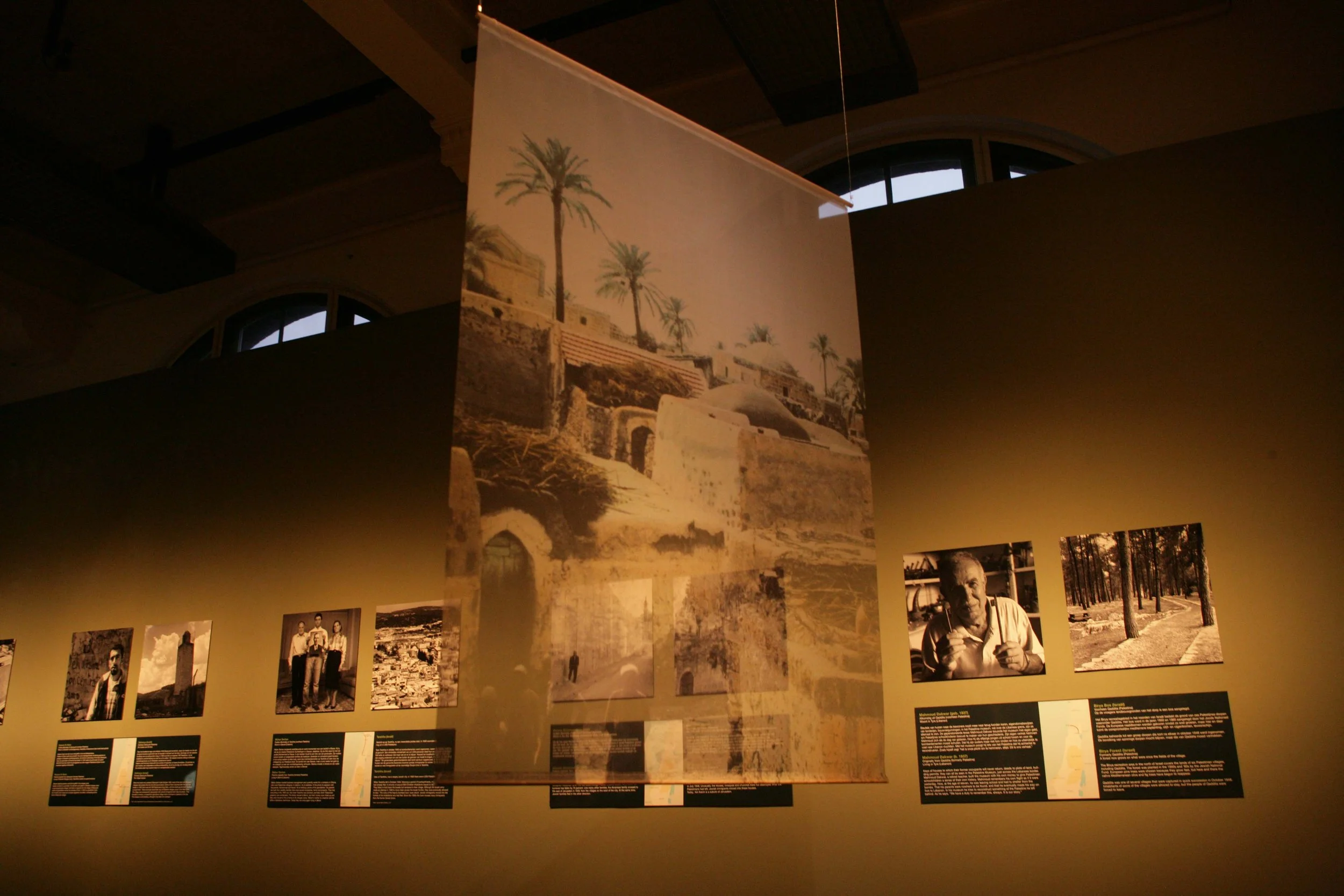
Exhibition installation from Remembering a Lost Homeland, Tropenmuseum, Amsterdam (2008)
Homeland Lost Photobook
Nearly twenty years on, Homeland Lost has acquired new relevance as an archival document of displacement and its intergenerational effects. At a moment when questions of migration, statelessness, and historical accountability are increasingly central to public debate, the project offers a sensitive, human-centred record of a community shaped by rupture yet sustained by belonging. Its portraits invite viewers to consider not only what was lost, but also what persists: attachment, dignity, and the assertion of history through personal testimony.
The forthcoming photobook will expand the project’s scope, presenting the full archive of 177 portraits and 81 village sites alongside mapping material and a newly commissioned essay by a Palestinian writer. Together, these elements reposition Homeland Lost as both an artistic undertaking and a significant historical resource, contributing to broader conversations around representation, human rights, and the visual narrativization of displacement.
About the Photographer
Alan Gignoux is an award-winning documentary photographer and founder of Gignouxphotos, which produces documentary photography projects focussing on socio-political and environmental issues around the world. Gignoux specializes in long form documentary projects that explore an issue and its impact on communities over long periods of several years; combining photography, video, interviews, research, and writing in creative and innovative ways to create layered projects offering multiple perspectives
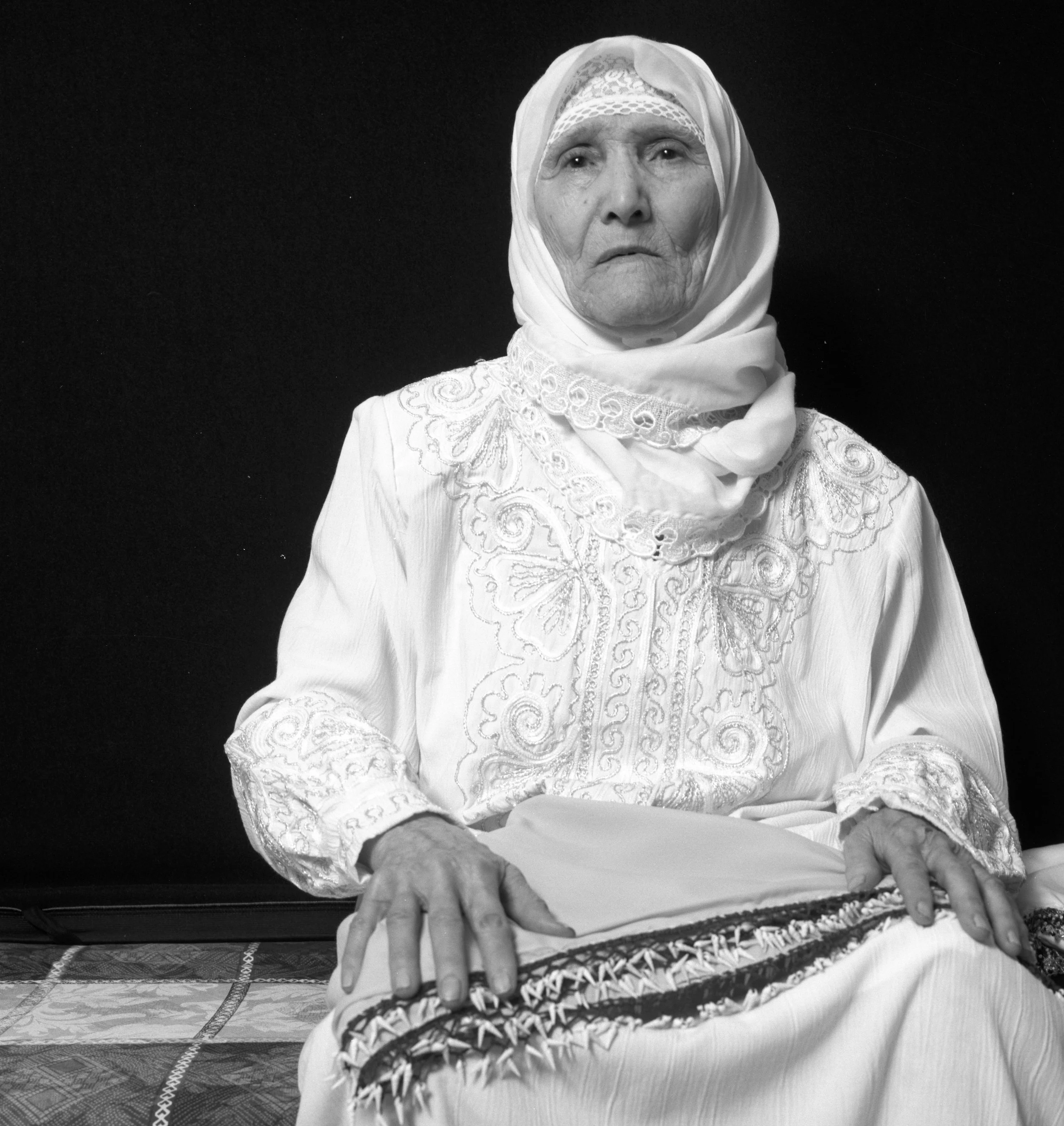
Left: Zeinab al-Saqa, photographed in Burj Barajneh Camp, Lebanon; originally from Al-Nahr, former Palestine
Right: Al-Nahr, former Palestine
Credits
Original project sponsored by the British Council East Jerusalem.
Middle East tour sponsored by the A.M. Qattan Foundation
Jenny Christensson
Exhibition curator
Robin Bell
Black and white exhibition prints