Russian Rust Belt
A Turbulent and Painful Period of Change
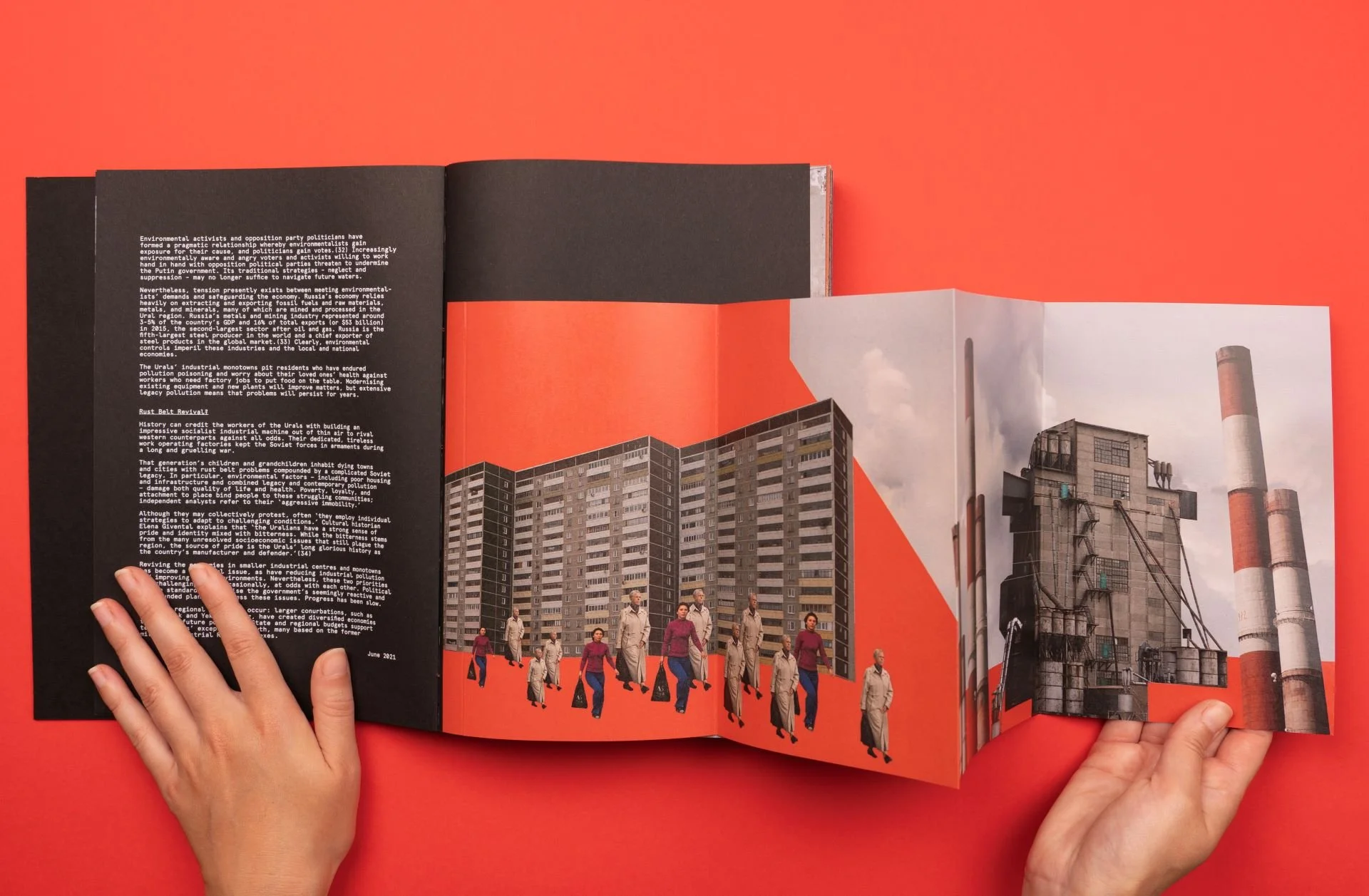
The Urals industrial area was central to Josef Stalin’s plans to modernise the Soviet Union and manage the transition from an agrarian to an industrial economy, using a socialist model. The region includes several historically significant “monocities” (single-industry urban centres) such as Ural Mash, Chelyabinsk, Nihzny Tagil and the renowned steel town, Magnitogorsk. The Urals also played an important role in the Soviet military industrial complex, serving as home to the production of military equipment and the production and storage of nuclear material, such as the top-secret Mayak nuclear weapons production complex located in the Ural Mountains city of Chelyabinsk-40.
Following the collapse of the USSR in 1991, the region went through a turbulent and painful period of change, as the Soviet economy contracted dramatically in response to the transition from a Communist, centrally planned economy to a market economy. When Alan travelled there he witnessed the combined effects of the long-term failure of Soviet central planning and the dire and immediate economic consequences of the fall of the USSR.
