Russian Rust Belt
Alan Gignoux
Photobook
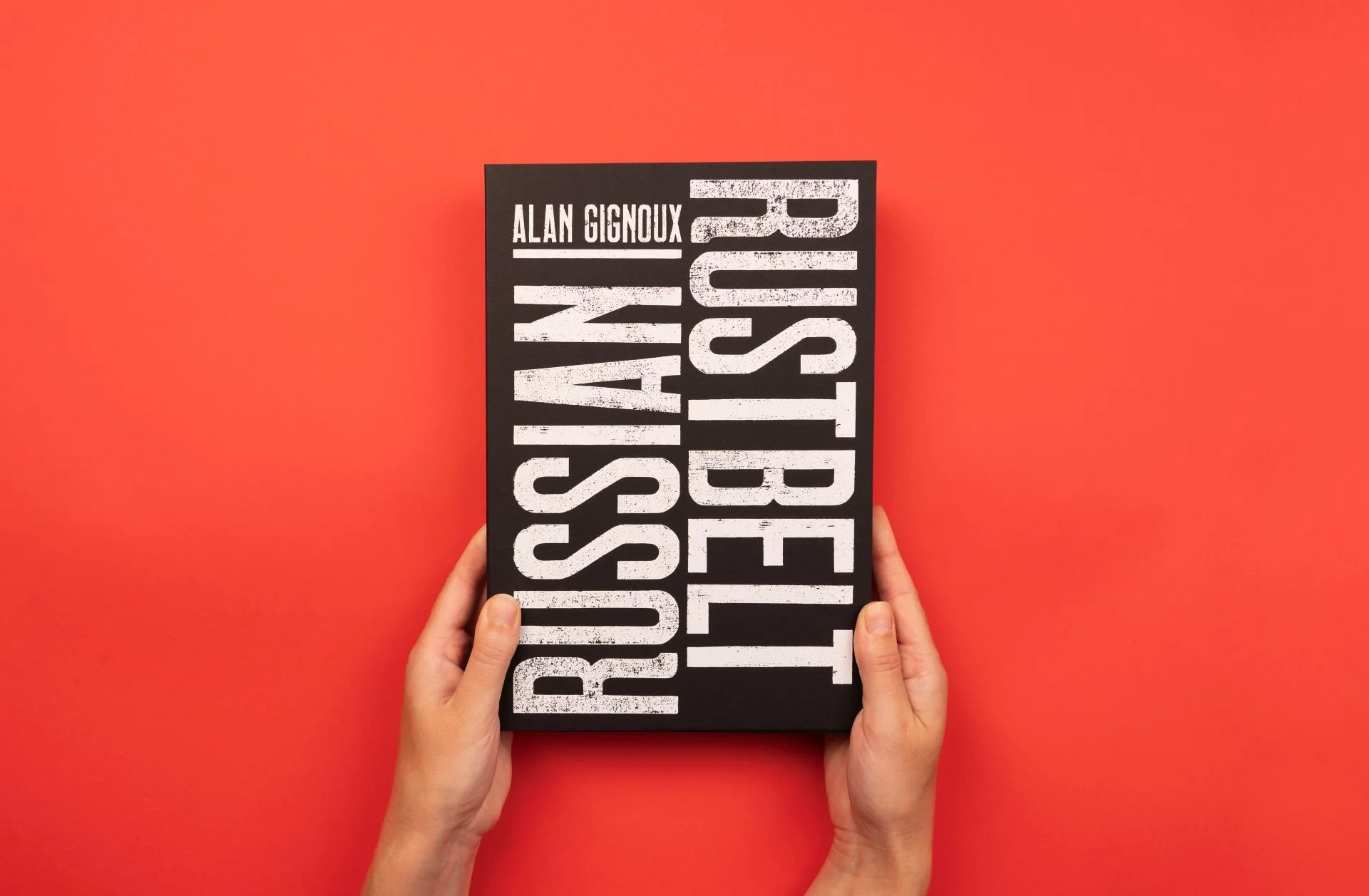
Russian Rust Belt is based on Alan Gignoux’s photographs from 2009 documenting industrial decline and renewal in the Urals.
Gignoux was invited by Alisa Prudnikova of the NCCA (National Centre for Contemporary Art) in Yekaterinburg to participate in a residency with the first Ural Industrial Biennial of Contemporary Art, which took place in 2010. The Biennial aimed to explore the tensions arising from the city’s transformation from the industrial capital of the USSR to a post-industrial metropolis. At the time, Russia’s transition to a market system with increasing integration into the global western-led economy seemed certain. Cultural exchanges with foreign artists were part of that outward-facing vision.
During his residency, Gignoux travelled throughout the Urals documenting the region’s once mighty industrial centres. His photographs bear witness to industrial decline on a massive scale: abandoned factories, decaying housing, and crumbling infrastructure. He shows us people going about their daily lives in the shadow of monumental factories belching poisonous smoke into the air and slag piles leaching chemicals into the soil and water. He records the last remaining structures in Muslyumovo, a village still contaminated by the explosion at the Mayak nuclear facility in 1957. However, he also documents historical buildings restored to their former glory, newly constructed modern offices, and earnest young employees in a gleaming insulin producing pharmaceuticals factory.
At the time, Gignoux was aware that he was witnessing the final gasps of a dying Soviet industrial past and the disturbing signs of its persistent legacy. Yet, he could also see evidence of the optimistic new future that seemed to shimmer on the horizon.
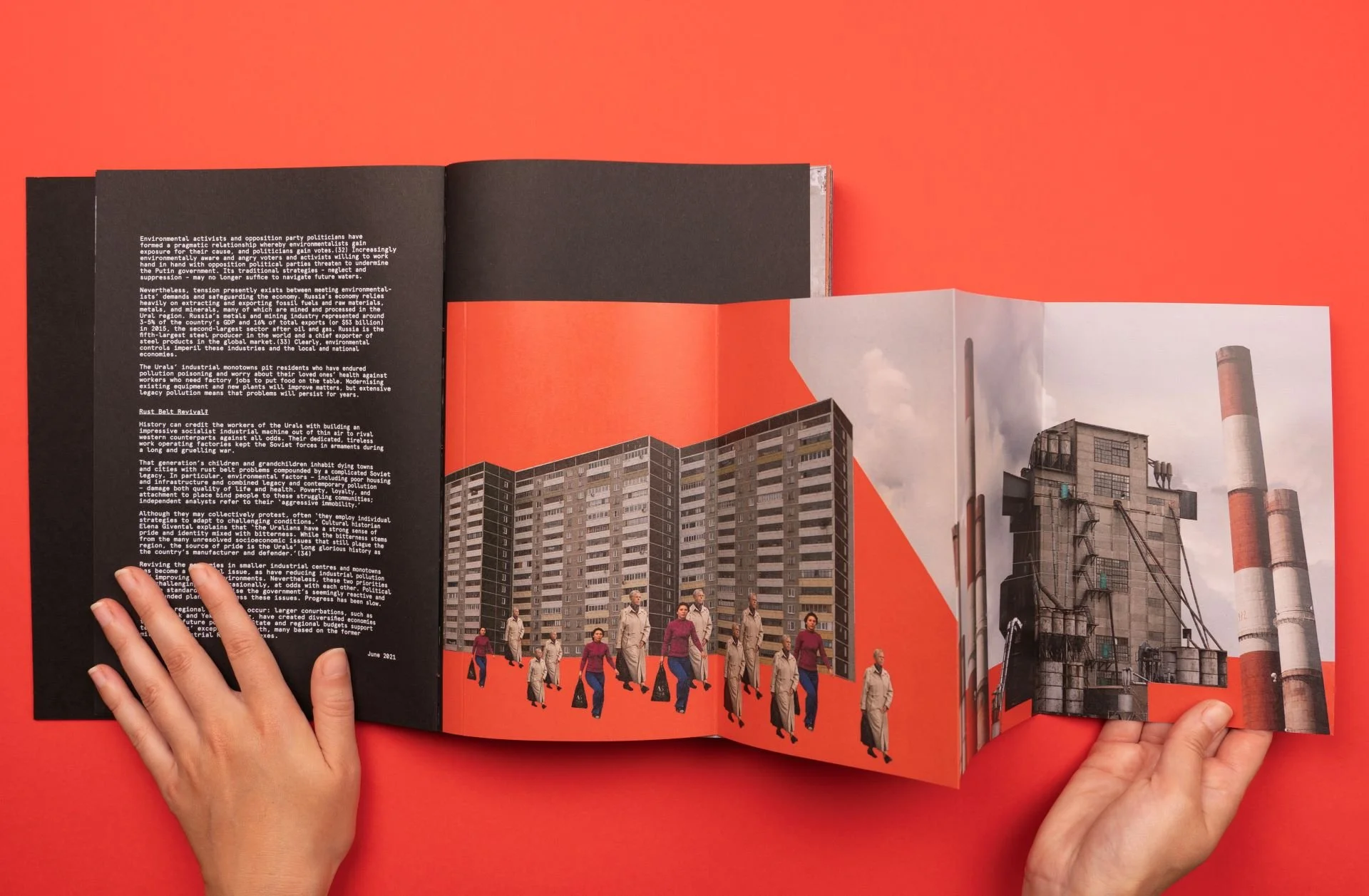
The design of the Russian Rust Belt book was inspired by the Soviet photobooks produced between 1920 and 1941. These used cutting edge design features, such as bold and original typography and graphic devices, wallpapers, fabric inserts, photomontage, extended foldouts, and half pages, to impressive effect, creating inspirational, modern, confident books that reflected and celebrated a shared Utopian vision of life and work.
Russian Rust Belt repurposes those devices to reflect the dismantling of the Soviet dream, visualized in response to a series of words: fracture, rupture, shatter, splinter, decay, corrode, crumble, fall apart. The photobook aims to embody in terms of design, form, and content the Russian rust belt experience, with its specific Soviet and post-Soviet character.
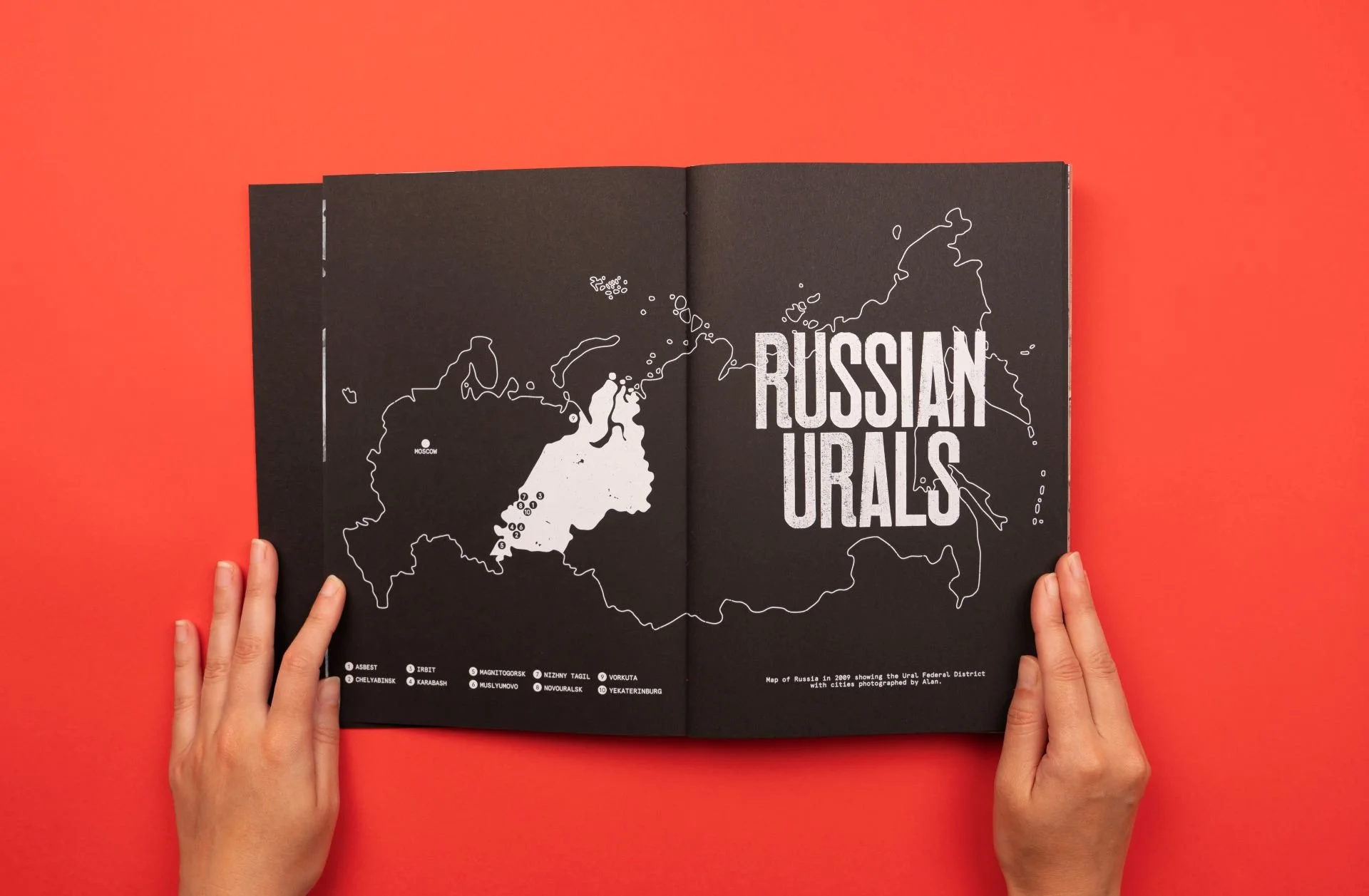
Conceived by Emily Macaulay, Chloe Juno and Jenny Christensson, the Swiss-bound photobook features 182 colour photos by Alan Gignoux, some presented as foldouts. Book designer Emily Macaulay created a foldout photomontage for the start of the book and four “wallpapers” made with cut-outs from Gignoux’s photographs, which are interspersed throughout. The book includes an introductory essay about the history of the Russian rust belt, a hand drawn map of the Ural region with the cities Gignoux visited, and ten city biographies - single page essays giving a brief industrial history for each of the locations. The arresting typography for the titles throughout was created by graphic artist Anthony Burrill using a Russian woodblock typeface supplied by Partisan Press, a Moscow based letterpress studio.
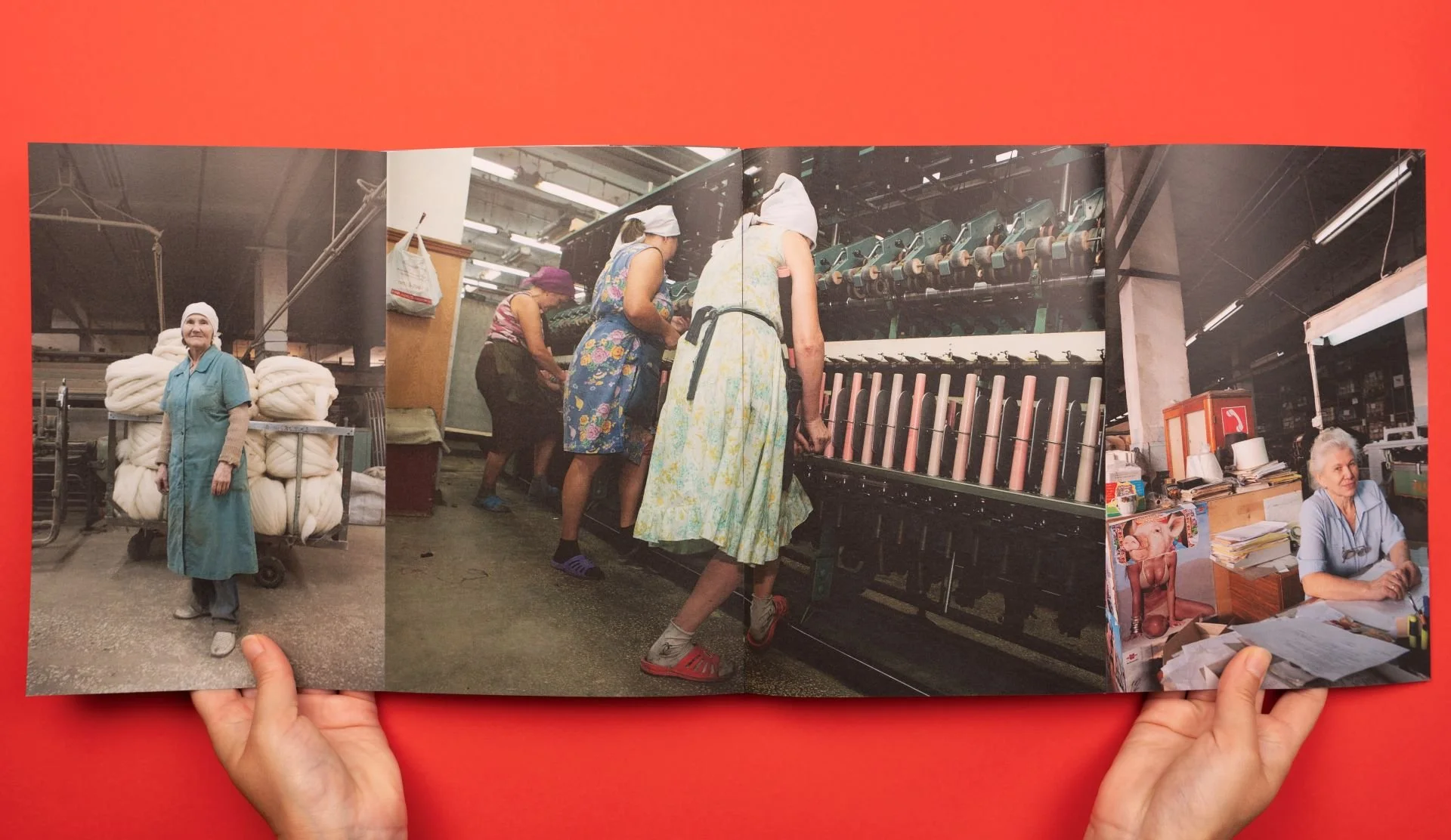
Photos of book cover and spreads by Curtis James
About Alan Gignoux
Alan Gignoux is an award-winning documentary photographer and founder of Gignouxphotos, which produces documentary photography projects focussing on socio-political and environmental issues around the world. Gignoux specializes in long form documentary projects that explore an issue and its impact on communities over long periods of several years; combining photography, video, interviews, research, and writing in creative and innovative ways to create layered projects offering multiple perspectives.
Russian Rust Belt is Gignoux’s fourth book addressing an environmental theme. Earlier books include award-winning Oil Sands (2018) which looks at the Canadian bitumen mining industry, From Mountaintops to Moonscapes (2021) which documents mountaintop removal mining in Appalachia and Monuments (2022) in collaboration with Chloe Juno, which commemorates communities in Germany earmarked for demolition to make way for surface coal mining.
Credits
Alan Gignoux
Photographer
Jenny Christensson
Editor, essays and text
Alan Gignoux, Chloe Juno, and Jenny Christensson
Photo Editors
Emily Macaulay at Stanley James Press, Chloe Juno, and Jenny Christensson
Designers
Ambrose Musiyiwa
Photomontage and wallpapers
Anthony Burrill
Typography
Another Fine Mesh, Lewes
Front and back cover screen print
Emily Macaulay
Front and back cover screen print
One Digital, Brighton
Printers
Alison Bracker
Editor and copy editor
Book Details
Edition of 100
186 x 277mm
Handbound
264 pages including foldout pages distributed throughout
182 colour photos in total (excluding covers)
4 colour “wallpaper” pages
1 foldout montage
ISBN: 978-1-9999610-6-0